Do Movers Pack Your Stuff? What's Actually Included in Full-Service Moving
It's one of the most common questions people have before booking a move, and one of the least clearly answered anywhere online: does "full-service moving" mean the movers pack everything, or just carry the boxes you've already packed? The honest answer is that it depends entirely on what's booked, and the terminology in this industry is used loosely enough that two companies can describe very different services with the same words. This guide walks through what each tier of service typically includes, what's usually excluded regardless of the package, and how to ask the right questions before moving day so there are no surprises.
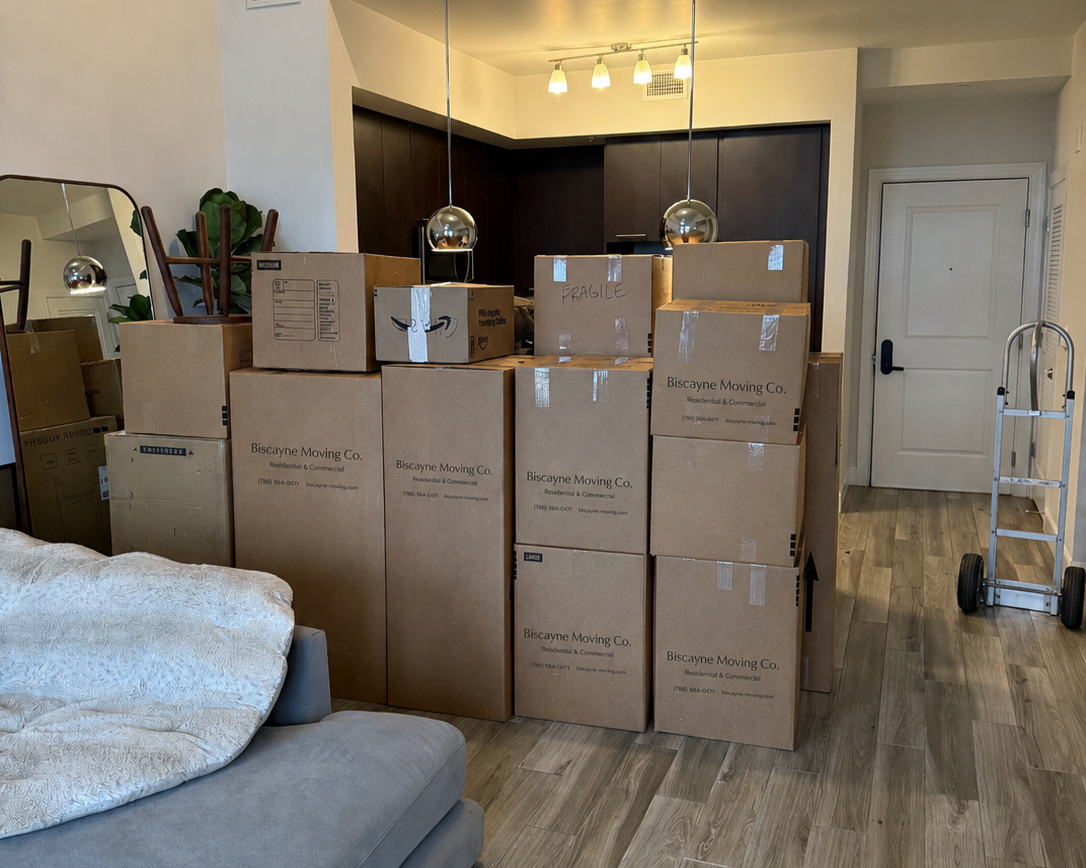
The Spectrum of Moving Services
Moving companies generally operate somewhere along a spectrum, and understanding where a given quote falls on it makes a significant difference in what to expect.
At one end is a labor-only move, where the crew's role is limited to loading, transporting, and unloading. Everything arrives already packed into boxes, and the movers aren't responsible for boxing, or preparing individual items.
A partial-pack service sits in the middle. Here, the moving company typically handles the more delicate or complicated categories, dishware, glassware, artwork, electronics, while the client packs the more personal items like clothing, books, and linens.
A full-service pack means the crew arrives with all necessary materials and packs the entire home from start to finish, room by room, before the load begins.
White-glove service goes a step further still. It generally includes full packing, but also custom crating for high-value or irregularly shaped items, careful furniture disassembly and reassembly, protective floor and doorway coverings during the move, and a level of attentiveness to detail that a standard full-service move may not include by default.
Knowing which of these a quote actually reflects, rather than assuming based on the label alone, is the single most useful question to ask before booking.
How Much Movers Handle, By Service Level
Packing vs. Protecting: A Distinction Worth Understanding
One of the most common misunderstandings clients have is assuming that if they don't need packing services, their belongings won't be protected during the move. These are actually two separate things, and conflating them leads people to either pay for packing they don't need, or worry unnecessarily about items that were never at risk in the first place.
Packing refers to placing items into boxes, collecting and organizing individual pieces, and preparing the contents of a home for transport. This is the service someone opts out of when they've already boxed their belongings themselves.
Protecting, on the other hand, refers to how the moving crew safeguards furniture, floors, doorways, and larger items during the loading, transport, and unloading process, regardless of whether packing was part of the service booked. This isn't an add-on. It's a standard part of how a professional crew operates on every move.
In practice, this means that even on a labor-only move where a client has packed every box themselves, the crew will still wrap sofas, mattresses, headboards, and dressers in moving blankets and protective covering. Furniture legs and corners are typically padded to prevent scuffing during transport. Doorframes, stair railings, and flooring at both the origin and destination are protected from scrapes and dents as pieces are carried through. Mattresses and box springs are usually placed in protective covers, and glass tabletops, mirrors, or artwork left unpacked are wrapped and handled with the same care whether or not a formal packing service was purchased.
The distinction matters because it changes what someone should actually be evaluating when they choose not to book packing. Skipping packing means handling the boxes yourself; it doesn't mean handling the furniture protection yourself; that remains part of what a professional crew does on every job, full-service or not. Anyone comparing quotes is better served asking specifically how furniture and flooring are protected during the move, rather than assuming that declining packing means declining protection altogether.
What's Typically Included in Full-Service Packing
When a move is booked as full-service, the expectation is that the crew arrives prepared to handle nearly everything inside the home. This generally includes:
Providing all packing materials, boxes, packing paper, bubble wrap, tape, and specialty containers for items like mirrors or televisions
Packing kitchens, closets, and common areas, including wrapping fragile items individually
Disassembling furniture that requires it, such as bed frames, dining tables, or sectional sofas, and reassembling them at the destination
Wrapping upholstered furniture and mattresses in protective covering for transit
Labeling boxes by room to streamline the unpacking process at the new home
For clients who want the process handled from beginning to end, this is typically the tier that removes the most work, and it's the level of service most closely associated with a full-service moving experience.
Specialty and High-Value Items
Certain categories of belongings require handling beyond standard packing, regardless of which tier of service is booked. Fine art, antiques, wine collections, and pianos are common examples, and a well-prepared moving company should have a clear, specific answer for how each is handled rather than a general assurance that "it'll be fine."
Artwork and mirrors are typically packed in custom-built crates or specialty art boxes rather than standard cardboard. Wine collections often require climate consideration and secure, cushioned transport to prevent bottle movement. Pianos require trained handling and, in many cases, specialized equipment for safe transport, an upright piano and a grand piano are not moved the same way. Antiques and irreplaceable items benefit from custom crating built to the item's specific dimensions rather than generic packing materials.
If any of these categories apply to a move, it's worth asking directly how the company handles them, whether that expertise exists in-house, and whether custom crating is available, rather than assuming standard packing materials will suffice.
What Clients Are Typically Responsible For
Even in a full-service arrangement, a few things generally remain the client's responsibility. Setting aside anything in the excluded categories above ahead of time avoids last-minute complications. It's also common practice to point out particularly fragile or sentimental items directly to the crew rather than assuming they'll be identified automatically, and to do a final walkthrough of the space once packing is complete to confirm nothing has been missed.
Questions Worth Asking Before Booking
Because "full-service" and "white-glove" aren't standardized industry terms, the clearest way to know what's actually included is to ask directly. A few questions worth raising during the quote process:
Does the quoted price include all packing materials, or are boxes and supplies billed separately? Is furniture disassembly and reassembly included, or treated as an add-on? How are high-value or specialty items such as art, pianos, or antiques handled, and is custom crating available if needed? Is there a walkthrough or inventory process before the move to confirm what's included? And finally, what specifically falls outside the scope of the service being quoted?
A company that answers these clearly and specifically, rather than in general reassurances, is usually a good indicator of how the move itself will go.
Why Local Experience Matters: Packing and Protecting in Miami's High-Rises and Condos
Packing and protecting a home in South Florida comes with a set of variables that don't apply everywhere, and a crew's familiarity with them often matters more than the packing materials themselves.
Climate and Humidity
South Florida's humidity affects how items should be packed, not just wrapped. Cardboard and paper-based packing materials absorb moisture faster in Miami's climate than in drier regions, which can compromise the protection of books, documents, and paper goods if the wrong materials or timing are used. Wood furniture and instruments are similarly sensitive to humidity swings between an air-conditioned interior and a truck sitting outside for a stretch of time. Movers who work in this market daily account for this as a matter of routine, using materials and sequencing suited to the environment rather than a generic approach built for a different climate.
Building-Specific Protection Requirements
Moving through a high-rise or condo building in Miami, Sunny Isles Beach, or Fort Lauderdale isn't the same as moving out of a standalone house. Most buildings require specific floor and elevator protection, padded panels, corner guards, and protective runners, before a move is permitted to begin, and many management offices inspect hallways and elevators both before and after the move to confirm nothing was damaged. Crews unfamiliar with a specific building's requirements can lose significant time on move day simply figuring out what's expected, while an experienced local crew typically already knows the protocol for many of the region's major buildings.
Older buildings throughout Miami-Dade often have terrazzo flooring, narrow service elevators, and tighter hallway turns than newer construction in areas like Sunny Isles Beach or Aventura, each of which calls for a different approach to protecting both the furniture and the building itself during transport. A crew that regularly works in these specific buildings brings a working knowledge of these layouts that general packing skill alone doesn't provide.
Why the Two Skills Are Connected
Packing determines whether an item survives being boxed and transported. Protecting determines whether it, and the building around it, survives the physical process of getting from one unit to the truck and back again. In a market like South Florida, where condo and high-rise living is the norm rather than the exception across Miami, Sunny Isles Beach, Aventura, and Fort Lauderdale, these two skills function as one continuous discipline rather than separate services. A crew that only knows how to pack a box, without also understanding how to navigate a service elevator reservation or protect a terrazzo lobby floor, is only handling half of what a South Florida move actually requires.
Frequently Asked Questions About Full Service Moving
-
It depends on the service tier booked. A labor-only move includes no packing, a partial-pack service typically covers fragile and complex items while the client handles the rest, and a full-service or white-glove move includes complete packing of the home from start to finish.
-
Hazardous materials, perishable food, firearms, and valuables such as cash, jewelry, and important documents are typically excluded from what movers will pack or transport, unless items are packed by owner in a safe or sealed box.
-
When handled properly, yes. This usually involves custom crating built to the item's specific dimensions rather than standard packing materials, so it's worth confirming this capability exists before booking if the move includes valuable or irregularly shaped items.
-
Ask directly. Because the term isn't standardized across the industry, the clearest approach is to confirm what's covered, materials, furniture handling, specialty items, and what falls outside the quoted service, before the move date.